Why Are My Indoor Plants Dying? 7 Common Mistakes & Fixes
Introduction
Most indoor plant problems are reversible if diagnosed early. Identifying the underlying cause—whether environmental, cultural, or biological—allows you to take targeted corrective action. In this article we examine seven frequent mistakes and provide clear, step-by-step fixes so you can bring your plants back to vigorous health.
1. Overwatering: the most common cause of decline
Problem: Excessive watering is the leading cause of indoor plant loss. Overwatered roots cannot obtain oxygen, root tissues deteriorate, and pathogens such as Phytophthora or Pythium proliferate in saturated soils.
Symptoms: Yellowing lower leaves, soft or mushy stems at soil level, a sour or rotten smell from the potting medium, and slowed growth.
Professional fixes
- Assess soil moisture: Use a moisture meter or test by inserting a finger 1–2 inches into the soil. Water only when the topsoil is dry for plants that prefer moderate moisture; allow soil to dry more completely for drought-tolerant species.
- Ensure drainage: Use pots with adequate drainage holes and well-draining potting mix. If the existing pot lacks drainage, repot into a container with holes and use fresh medium.
- Rescue waterlogged plants: Remove the plant, trim rotten roots with sterile shears, allow roots to dry for a few hours, and repot into fresh, dry potting mix. Avoid fertilizing until recovery begins.
- Adjust watering schedule: Reduce watering frequency in cooler months and for plants with slower winter growth.
2. Insufficient or inappropriate light
Problem: Light availability directly affects photosynthesis, growth, and plant morphology. Insufficient light often causes etiolation (leggy growth) and pale foliage.
Symptoms: Pale leaves, elongated stems, reduced flowering, and leaves leaning toward windows or light sources.
Professional fixes
- Identify light requirements: Classify plants as low-light, bright indirect, or direct sun species and place them accordingly.
- Maximize natural light: Position plants near east or north-facing windows for bright indirect light, or a few feet away from strong south-facing windows to avoid leaf scorch for sensitive species.
- Use supplemental lighting: For rooms with limited sunlight, install full-spectrum LED grow lights. Run lights on a timer for consistent photoperiods (typically 10–14 hours depending on species).
- Rotate plants: Rotate plants weekly to ensure even growth and prevent leaning.
3. Poor air circulation and indoor microclimates
Problem: Stagnant air increases humidity pockets, encourages fungal disease, and fosters pest outbreaks. Conversely, strong drafts from air conditioners and heaters can cause desiccation.
Symptoms: Leaf spotting, powdery mildew, increased pest activity (spider mites, mealybugs), and uneven leaf drying.
Professional fixes
- Improve airflow: Provide gentle cross-ventilation with doors or windows or use a small oscillating fan on low to maintain air movement without creating direct drafts on plants.
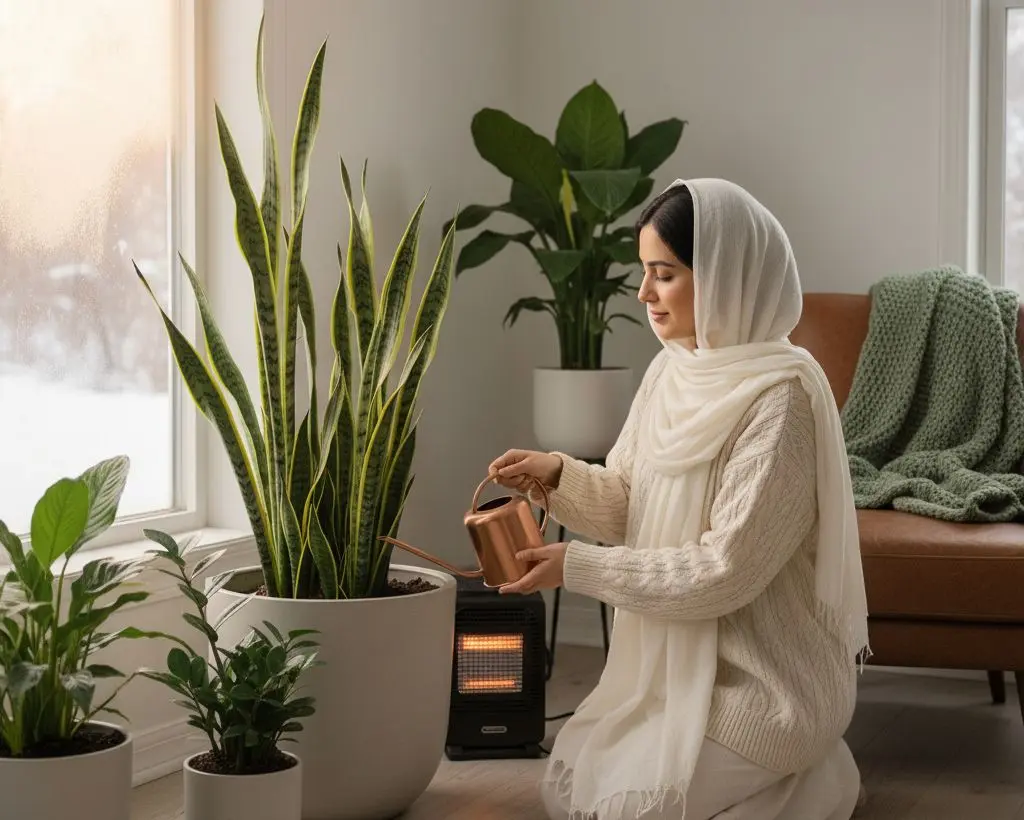
- Avoid extreme microclimates: Keep plants away from direct AC outlets, space heaters, or very cold windows in winter.
- Hygiene: Remove dead or decaying foliage promptly and clean leaves periodically to prevent dust accumulation and improve gas exchange.
4. Temperature stress and sudden changes
Problem: Temperature fluctuations, especially cold drafts or excessive heat near appliances, damage plant tissues and disrupt physiological processes.
Symptoms: Leaf browning at margins, leaf drop, slowed growth, and scorched or wilted foliage.
Professional fixes
- Maintain stable temperatures: Aim for a range appropriate for most houseplants: 18–28 °C. Avoid nightly drops below 12–15 °C for tropical species.
- Avoid direct heat sources: Keep plants several feet away from radiators, space heaters, and direct airflow from HVAC vents.
- Insulate during winter: Pull plants slightly away from cold window panes and consider providing a warm zone by moving plants into central rooms overnight.
5. Incorrect potting mix and container choices
Problem: The wrong potting medium retains too much water or is too compact, restricting root development and oxygen access. Inadequate container size may also restrict root growth or lead to rapid drying.
Symptoms: Stunted growth, waterlogged soil or conversely very rapid drying, rootbound plants with circling roots.
Professional fixes
- Use species-appropriate mixes: Use loamy, well-draining mixes for most foliage plants and add perlite or coarse sand for improved drainage where required. Succulents require gritty, fast-draining mixes.
- Choose correct pot size: Select pots that allow 1–2 inches of root growth beyond the root ball for most plants. Repot when roots circle the container or emerge from drainage holes.
- Repotting schedule: Refresh the top layer of soil annually and repot every 12–24 months depending on growth rate.
6. Pests and diseases
Problem: Insects (aphids, spider mites, mealybugs, scale) and fungal or bacterial pathogens weaken plants and often go unnoticed until significant damage occurs.
Symptoms: Sticky residues, fine webbing, discolored spots, misshapen new growth, or sudden leaf drop.
Professional fixes
- Regular inspections: Examine plants weekly, paying attention to new growth and undersides of leaves. Early detection simplifies treatment.
- Non-toxic treatments: Use neem oil, insecticidal soap, or horticultural oil for soft-bodied pests. Apply treatments according to label instructions and repeat at recommended intervals.
- Sanitation: Quarantine new plants for two weeks before introducing them to the main collection. Remove heavily infested material and sterilize tools between uses.
- Fungus management: Reduce overhead watering, improve drainage, and use appropriate fungicides for persistent fungal issues.
7. Nutrient deficiencies and fertilization errors
Problem: Both lack of essential nutrients and over-fertilization (fertilizer burn) cause decline. In winter, many houseplants reduce growth and need less fertilizer.
Symptoms: General chlorosis (yellowing) from nitrogen deficiency, interveinal chlorosis from magnesium or iron deficiency, brown leaf margins from salt build-up.
Professional fixes
- Balanced feeding: Apply a balanced, water-soluble fertilizer (for example NPK 10-10-10 or 20-20-20 diluted to half strength) during the growing season; reduce frequency in winter.
- Flush soil periodically: Leach excess salts by running water through the potting medium until it drains clear, then allow the pot to drain fully.
- Soil testing: If deficiencies persist, test the potting medium for pH and nutrient levels and correct accordingly (e.g., iron chelate for iron chlorosis in alkaline mixes).
Diagnosing your plant: a quick checklist
Use this checklist to identify the likely cause of decline:
- Soil condition: damp and compacted (overwatering) or dry and dusty (underwatering).
- Leaf symptoms: yellowing (overwatering or nutrient deficiency), brown crispy edges (underwatering or heat), pale new growth (light deficiency).
- Presence of pests: sticky residue, webbing, or visible insects.
- Environment: recent temperature changes, drafts, or relocation.
Address the most obvious issue first (water, light, pests), then monitor for improvement over 2–4 weeks.
Recovery plan for ailing plants
When a plant shows clear signs of decline, follow a conservative recovery program:
- Isolate the plant: Remove it from the main group to prevent pest spread.
- Correct immediate problems: Adjust watering, move to appropriate light, trim dead leaves, and treat pests if present.
- Repot if necessary: If roots are rotting or compacted, repot with fresh well-draining mix after trimming diseased roots.
- Staged fertilization: Wait until new growth appears before resuming a normal fertilization schedule.
- Track progress: Photograph and record changes weekly to judge recovery and adjust care.
When to consult a professional
If the plant continues to decline despite corrective measures, consider bringing a sample or photos to a local nursery or contacting a plant health specialist. Persistent root pathogens, severe nutrient imbalances, or systemic pest infestations may require laboratory diagnosis or specialized treatment.
If you prefer, Master Plants provides repotting services, pest treatment recommendations, and plant health diagnostics. Visit our shop or contact us for professional assistance.
Frequently asked questions (FAQ)
How often should I water indoor plants?
Watering frequency depends on species, pot size, and environmental conditions. As a general rule, water when the top 1–2 inches of soil feel dry for most foliage plants. Succulents require longer drying intervals. Use the finger test or a moisture meter to guide you rather than a fixed schedule.
Can I revive a plant with mostly dead leaves?
Yes, if the roots are still healthy. Remove dead foliage, check and treat roots if necessary, repot into fresh medium and provide appropriate light and water. Recovery may take several weeks to months depending on the plant.
Are chemical pesticides safe for indoor use?
Many pesticides are safe when used according to label directions. For household use, start with low-toxicity options such as neem oil or insecticidal soaps. Ensure adequate ventilation and avoid direct contact with skin and food preparation areas.